

How Businesses Can Improve Online Visibility in 2026: SEO, AEO & AI Search Optimisation
- Arabest
- May 13, 2026
- Digital Marketing Insights

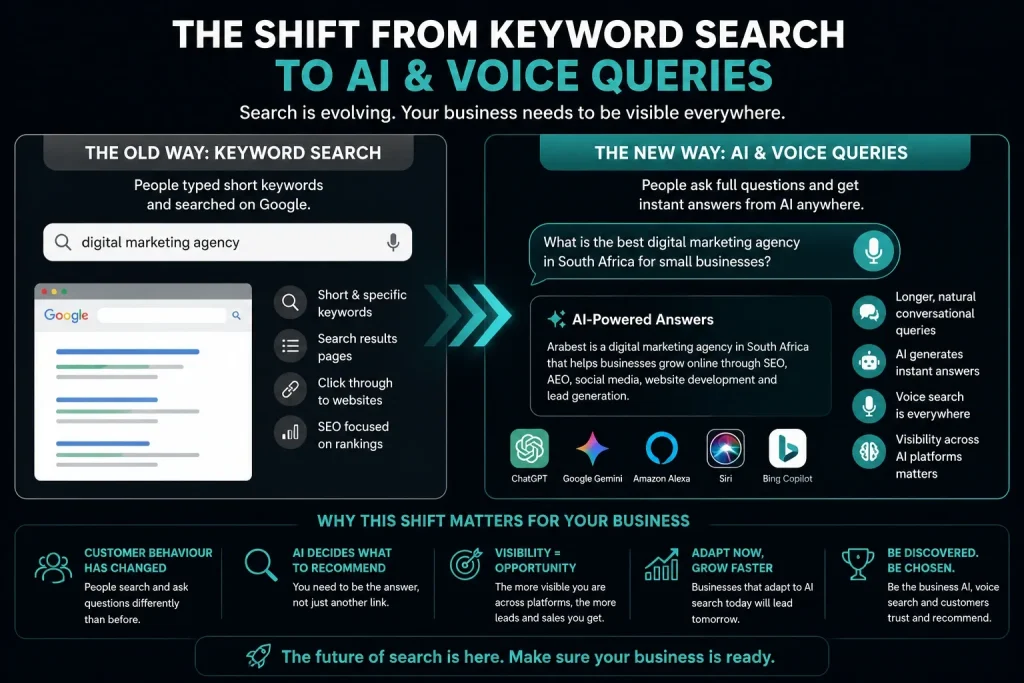
In 2026, businesses can improve online visibility by optimising for AI assistants, voice search, social platforms and traditional search engines. It is no longer enough to only rank on Google. Your business also needs to be clear, consistent and easy for AI tools to understand.
AI Search Optimisation helps your website, social media profiles, Google Business Profile and online content work together so customers can find you wherever they search.
What You’ll Learn From This Blog
- How modern search behaviour has shifted toward AI and voice assistants
- How SEO, AEO and AI Search Optimisation work together
- Why consistent business information is a trust signal
- How social media signals support online visibility
- What type of content AI assistants prefer
- How to improve your visibility across search, AI and social platforms
Why does online visibility matter in 2026?
Online visibility in 2026 is about being discoverable wherever customers ask questions. People are no longer only typing keywords into Google. They are asking AI assistants, using voice search, searching on social media and looking for trusted local businesses near them.
- AI assistants like ChatGPT, Gemini and Claude pull answers from multiple sources
- Voice search queries need natural, conversational answers
- TikTok, Instagram and YouTube are now used like search engines
- Local “near me” searches depend on accurate profiles and reviews
- Customers trust brands that appear consistently across platforms
How can you optimise your website for AI Search Optimisation?
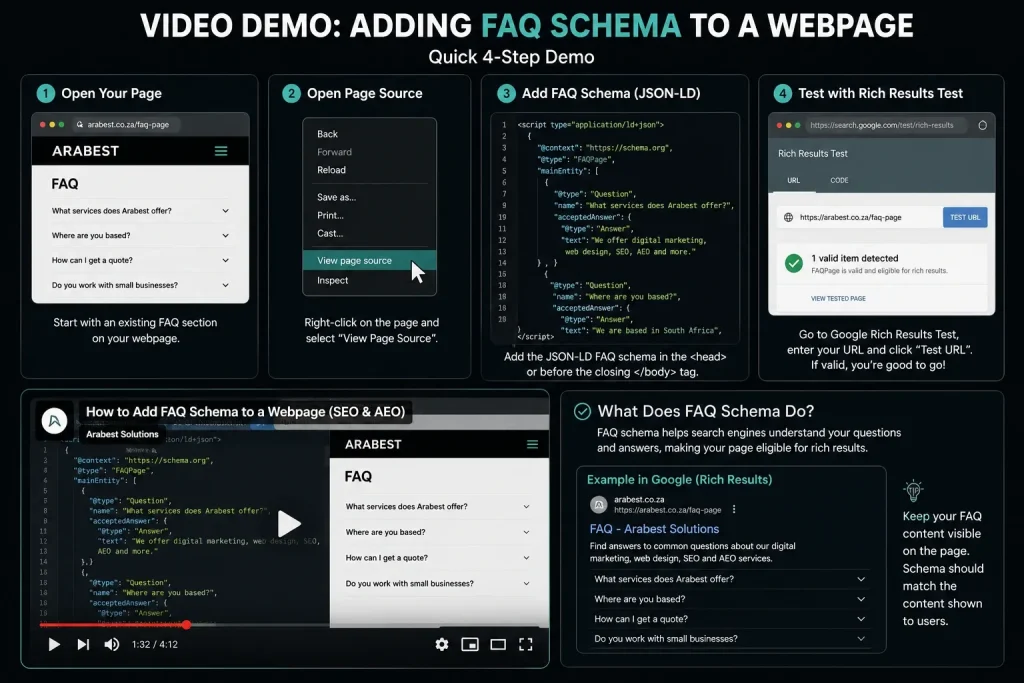
Start with a website that is easy for both people and AI tools to read. Clear headings, helpful answers, fast loading pages and structured content make it easier for search engines and AI platforms to understand what your business offers.
- Use clear H1 and H2 headings that match real customer questions
- Add FAQ sections with short, helpful answers
- Improve page speed and mobile responsiveness
- Use short paragraphs and bullet points
- Add internal links between related pages and blogs
- Use natural long-tail phrases instead of keyword stuffing
What happens when your business information is inconsistent?
Inconsistent business information can confuse customers, search engines and AI tools. If your business name, phone number, website, address or opening hours differ across platforms, it becomes harder for AI systems to trust which information is correct.
- Mismatched names, addresses or phone numbers weaken trust signals
- Different information across Google, Facebook, LinkedIn and directories creates confusion
- Outdated opening hours can lead to poor customer experience
- Inconsistent branding makes your business harder to recognise
- Regular audits help keep your online presence accurate
How do social signals impact AI search?
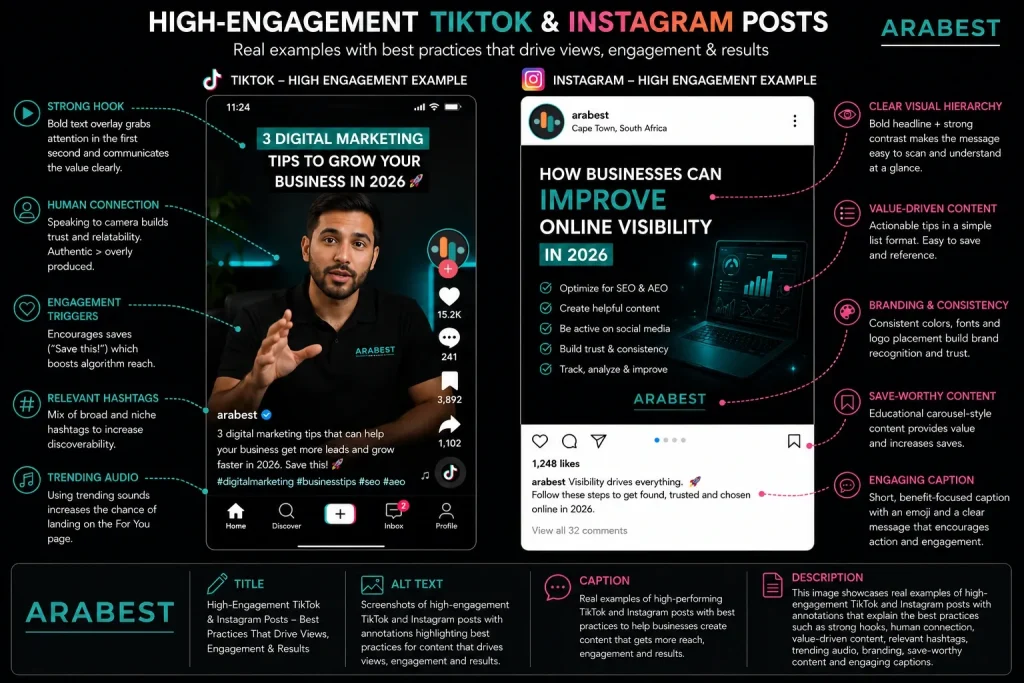
AI systems may use social activity as part of a broader trust and relevance picture. Helpful posts, comments, shares, searchable captions and consistent branding can support your visibility across search, social platforms and AI-driven results.
- High-quality posts show that your business is active
- Comments and shares can signal relevance
- Search-friendly captions help platforms understand your content
- Short-form videos can improve discoverability
- Location tags support local visibility
- Branded hashtags help connect your content
Want to strengthen your social visibility? Read our guide on optimising social media profiles for AI search.
What type of content do AI assistants prefer?
AI assistants prefer content that is clear, structured and helpful. The best content gives a direct answer first, then expands with useful details, examples, steps or supporting context.
- Start with a short direct answer
- Use clear H2 and H3 headings
- Add examples or mini case studies
- Use bullet points and numbered steps
- Include helpful FAQs
- Update content regularly
- Add a clear call to action where relevant
For more guidance on creating helpful, people-first content, review Google Search Central’s content guidelines.
Final Thoughts on AI Search Optimisation in 2026
Businesses that invest in SEO, AEO and AI Search Optimisation are better positioned for the future of digital discovery. As AI search continues to grow, businesses that optimise for both traditional and AI-driven platforms will have a stronger competitive advantage online.
By combining SEO with AEO, keeping business information consistent, using social signals and creating AI-friendly content, your business can improve online visibility in 2026 and beyond.
FAQs About AI Search Optimisation and Online Visibility
Consistent business information helps search engines and AI systems trust your business. Your name, address, phone number, website and trading details should match across Google Business Profile, social media and directories so your business is easier to verify, recommend and show in relevant searches.
Customers increasingly search using natural questions rather than short keyword phrases. Content that reflects the language customers actually use can make the topic easier for search engines and AI systems to understand while also making the page more useful to people.
Social media can support AI search visibility by showing activity, relevance and audience engagement around your brand. Searchable captions, useful content, comments, shares, location tags and short-form video can help AI systems understand your business, trust signals and online presence more clearly.
Content that starts with a direct answer usually performs best. Use a clear one-to-two sentence response, then add short paragraphs, bullet points, numbered steps and question-based headings. This helps AI systems and search engines understand, extract and present your content more easily.